Some Examples of Reports


The following examples show how different t-shirts can have markedly different environmental impacts.


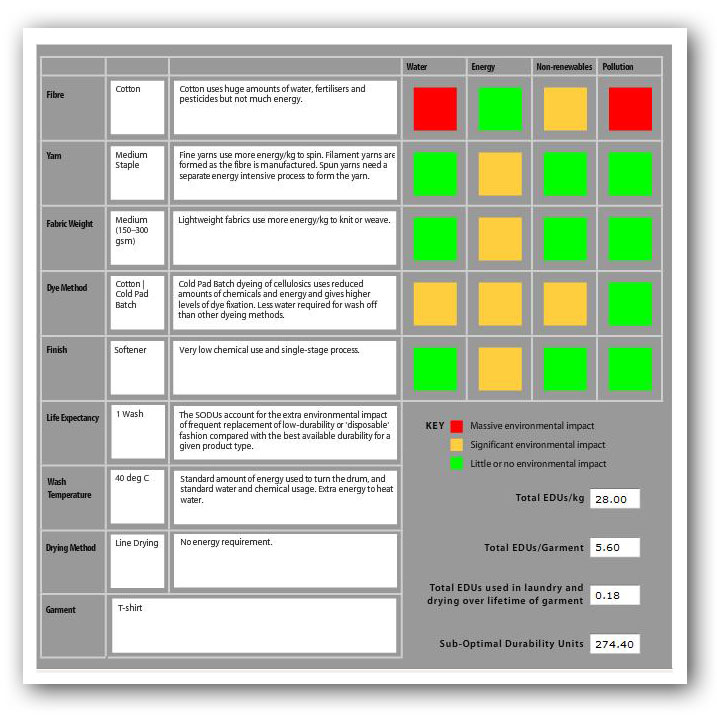
1. Disposable Fashion: a low quality cotton t-shirt dyed using cold dyeing technology that has to be thrown after the first wash.

· High impact fibre
· Relatively low impact dyeing process
· Virtually no domestic laundry impact
· Huge impact of having to continually replace garment with similar low-durability products

Disposable

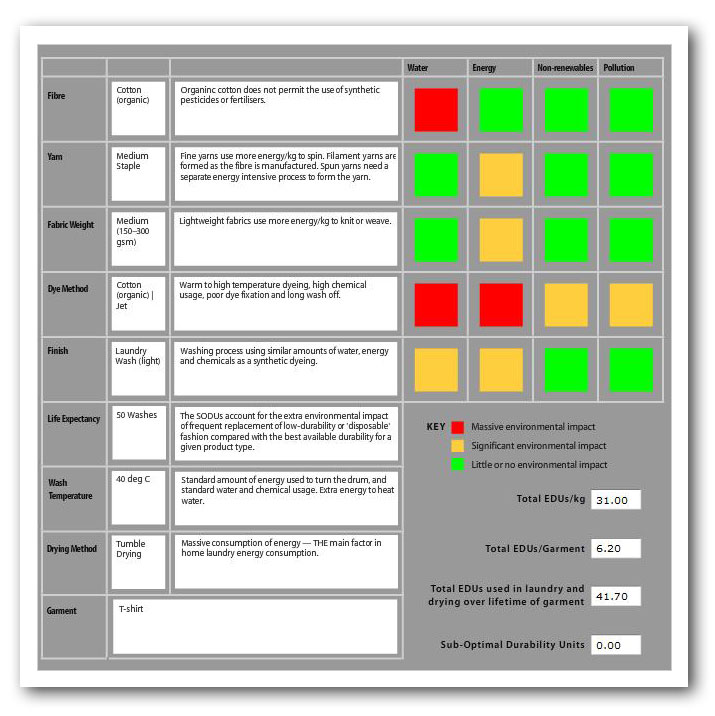
2. High quality organic: high quality durable cotton t-shirt dyed using conventional dyeing methods and then given laundry wash. Garment lasts 50 washes and is tumble dried.

·         Relatively low impact fibre
·         High impact dyeing and finishing
·         High impact of domestic laundry (because it lasts a long time)
·         No sub-optimal durability units because it is long lasting

Quality
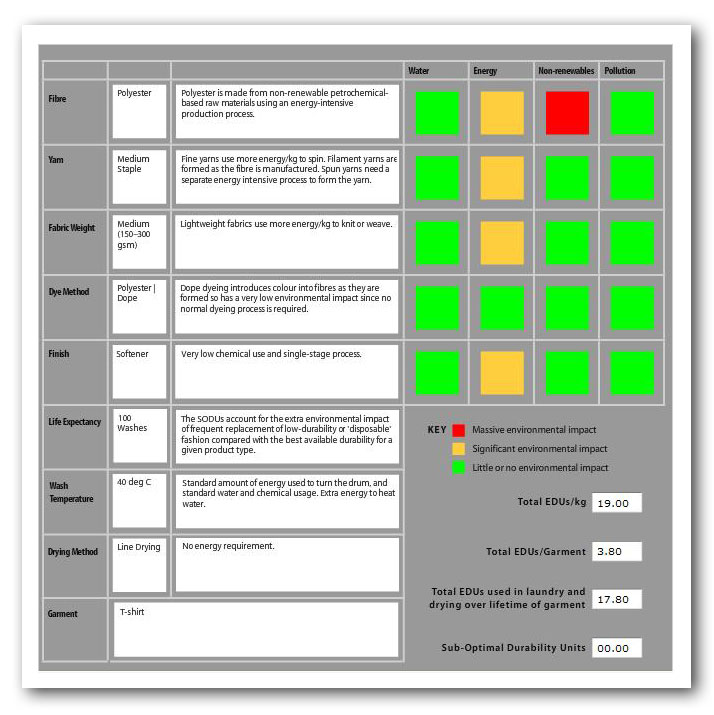
3. Dope dye polyester: Polyester T-shirt made of fibre that is dyed as the fibre is extruded. Lasts forever (100 washes+) and is line dried
·         Uses oil for fibre but relatively low impact overall
·         Zero impact dyeing
·         Medium impact of domestic laundry due to large number of washes but not bad           because of line drying
·         Super durable so no sub-optimal  durability units